Low-Maintenance Terrarium Plants
The whole point of a terrarium is that it mostly runs itself. These are the hardy, forgiving plants that thrive on neglect under glass — and the few that will fight you.
Published July 23, 2026
Some links below are affiliate links. We may earn a commission from qualifying purchases at no extra cost to you. Read our disclosure.
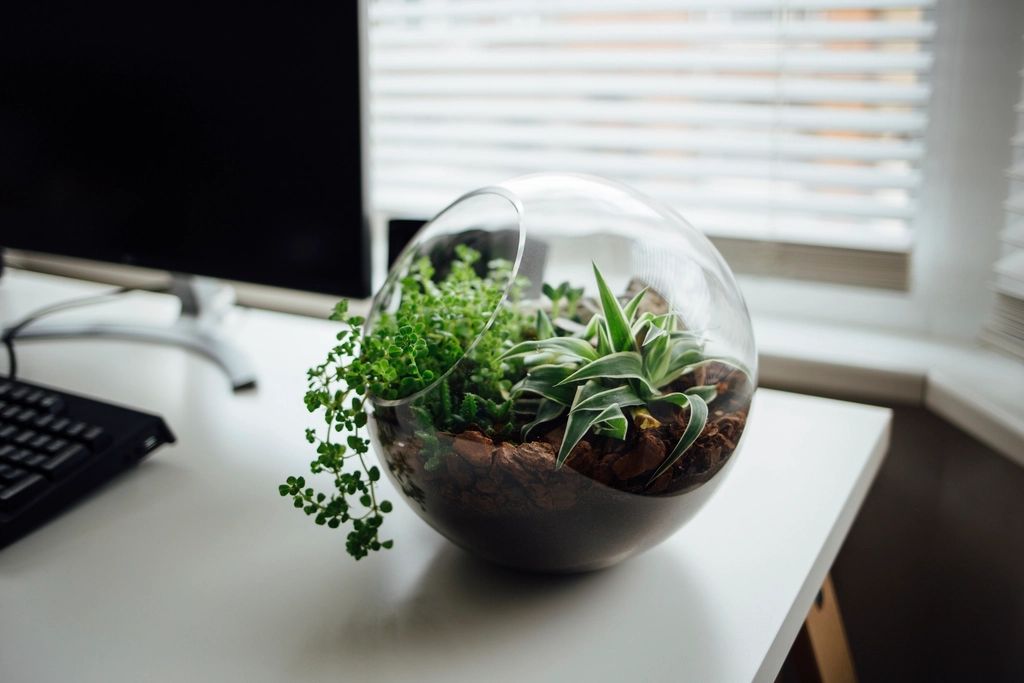
A terrarium is a tiny, humid, self-watering world — which makes it the easiest place on earth to keep certain plants alive. Pick species that love damp air and indirect light and the jar practically cares for itself. Pick a sun-loving succulent and you'll watch it rot. Here are the ten most low-maintenance terrarium plants, why they work, and the ones to leave on the shelf.
What makes a plant "low-maintenance" in a terrarium
Three things: it loves humidity, it tolerates low-to-medium light, and it stays small enough not to outgrow the glass. Plants from tropical forest floors tick every box — that's their native climate. Desert plants (succulents, cacti) fail because a closed terrarium is everything they hate: wet, warm and still. Match the plant to the environment and "maintenance" mostly disappears.
Nerve plant (Fittonia)
The poster child of terrarium plants. Fittonia's pink- and white-veined leaves stay small, love high humidity, and dramatically wilt when thirsty then spring back within an hour of water — it literally tells you when it needs help. Nearly impossible to kill in a closed jar.
Pothos and creeping fig
Both are near-indestructible trailing vines that root as they climb, so they knit a terrarium together and hide hardware. Creeping fig (Ficus pumila) stays small-leaved and clings to cork backgrounds; pothos grows faster and just needs the occasional trim. Give either low light and they shrug.
Moss
Live moss is the ultimate zero-effort terrarium carpet: no roots, no soil, no feeding — just humidity and indirect light. It greens up a build instantly and thrives exactly where other plants struggle. Our best moss for terrariums guide breaks down which species to use, and moss care covers keeping it green.
Peperomia, pilea and baby's tears
This trio covers most looks. Peperomia offers thick, forgiving leaves in dozens of compact varieties; pilea (aluminum plant, friendship plant) adds silvery texture; baby's tears (Soleirolia) forms a fine green mat that spills over stones. All stay small, love humidity and ask for almost nothing. Many are compact enough for our plants that stay small picks too.
See peperomia & pilea on Amazon →
Ferns for humidity
Ferns evolved for damp, shaded forest floors, so a terrarium is home. Button fern, lemon button fern and maidenhair (a little fussier) all thrive in the still, humid air. They add soft height behind lower carpeting plants and rarely need more than the moisture the jar recycles.
See terrarium ferns on Amazon →
Plants to avoid
Skip succulents, cacti, air plants (in closed jars) and most herbs — they want dry air and bright sun and will rot in humidity. Also pass on anything vigorous like ivy or full-size philodendron that outgrows the glass in weeks. When in doubt, choose a tropical forest-floor plant over a desert or sun plant.
The only care they actually need
Bright indirect light (never direct sun), a well-draining substrate, and an occasional trim so nothing takes over. In a closed terrarium the water mostly recycles itself; in an open one, mist when the surface dries. That's it — pick right and "low-maintenance" is an understatement.
Plant needs vary by variety and home conditions — check a current care note for any specific plant before finalizing your setup.