
How to Build a Closed Terrarium
A sealed glass jar can hold a tiny, self-watering world that runs for months untouched — if you build the layers in the right order.
Published July 15, 2026
Some links below are affiliate links. We may earn a commission from qualifying purchases at no extra cost to you. Read our disclosure.
A closed terrarium is the simplest living thing you can build indoors: a sealed glass container where water cycles between soil, plant and glass on its own. Get the layers right and it can go weeks without a single drop added. This is a plant-only build — no animals — and a great first project before a bioactive animal setup.
Pick the right container
Any clear glass vessel with a lid or stopper works — a jar, a demijohn, a lidded bowl. Clear glass matters (colored glass starves plants of light), and a wide enough mouth to get your hand or a tool inside makes planting far easier. Bigger volumes are more forgiving of humidity swings than tiny jars.
See closed terrarium containers on Amazon →
Layer 1: drainage
Because a closed jar has no drainage holes, excess water has nowhere to go — so the bottom 2–4 cm is a drainage reservoir of small stones, gravel or LECA to keep roots out of standing water. This is the same principle as a bioactive drainage layer, just in miniature.
See drainage pebbles & LECA on Amazon →
Layer 2: activated charcoal
A thin scatter of horticultural activated charcoal over the drainage helps keep the closed, damp environment from turning sour and smelly. It's optional in a well-built jar but cheap insurance in a fully sealed one.
See activated charcoal on Amazon →
Layer 3: substrate
Add a few centimeters of a moisture-retaining, low-nutrient mix — see our terrarium soil recipe for a blend that resists compaction and mold. Deep enough for roots, shallow enough to leave headroom for growth.
Plants and moss
Closed terrariums want humidity-loving, slow-growing plants: fittonia, ferns, moss, small tropicals. Skip succulents and cacti — they rot in the humidity. A carpet of terrarium moss finishes the floor and holds moisture. Plant, mist lightly once, and seal.
See terrarium plants on Amazon →
Sealing and the water cycle
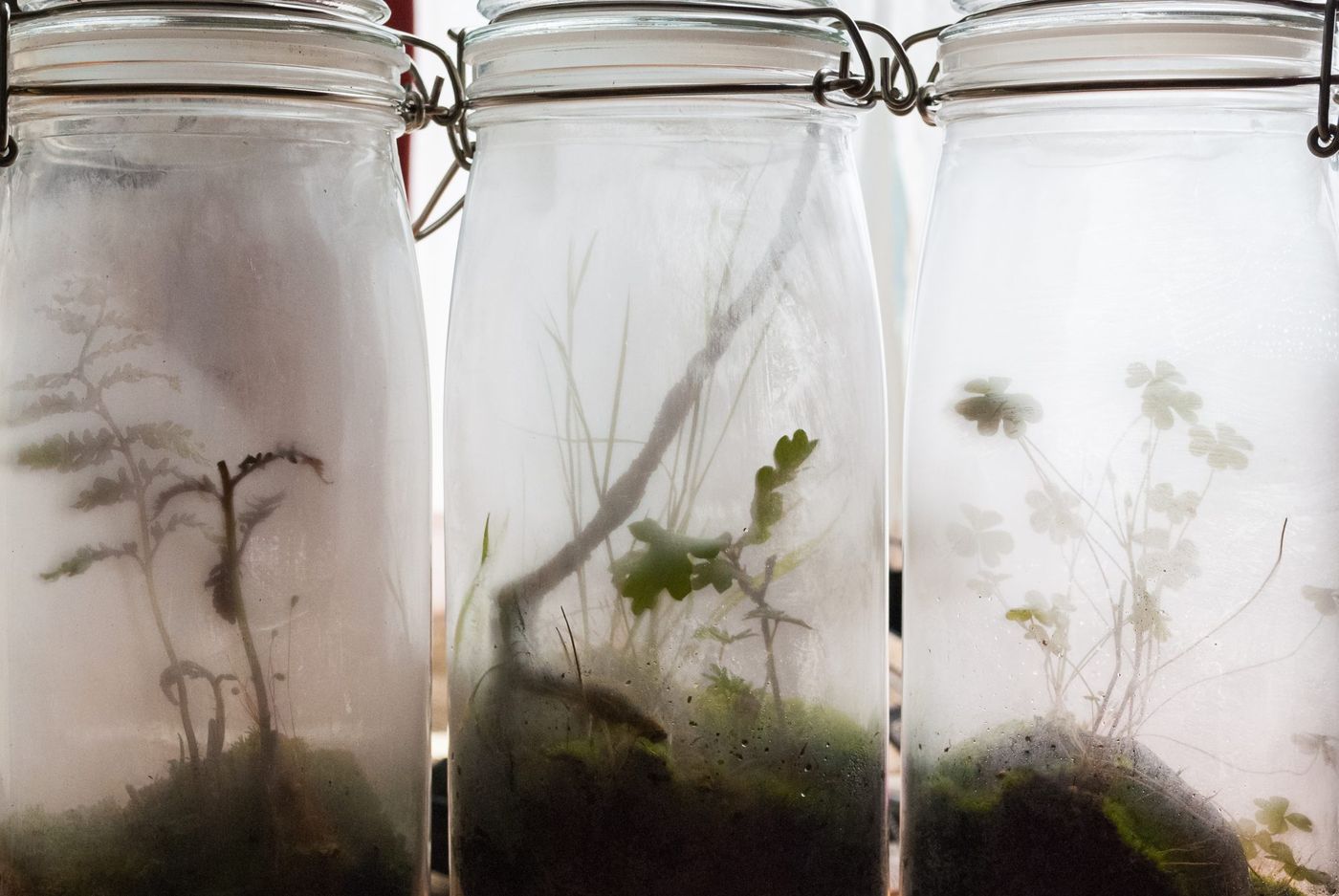
Once sealed, the jar recycles its own water: soil moisture evaporates, condenses on the glass, and runs back down. If the glass fully fogs over and stays that way, it's too wet — leave the lid off a day. If there's no condensation at all, add a little water. A balanced jar needs almost nothing after the first week or two.
Species and plant needs vary — check a current care sheet for your specific animal or plant before finalizing a setup.