
Moss Terrarium Care: Watering, Light & Beating Mold
A closed moss terrarium is one of the few living things you can mostly ignore. The trick is knowing which small signals mean act — and which mean leave it alone.
Some links below are affiliate links. We may earn a commission from qualifying purchases at no extra cost to you. Read our disclosure.
A sealed moss terrarium runs its own tiny water cycle: moisture evaporates, condenses on the glass, and rains back down. Get the setup right and it can go months untouched. Almost every problem people run into — fogging, browning, mold — traces back to just two variables, water and light. Master those and the rest looks after itself. New to this? Start with our closed terrarium build guide and best moss guide, then come back here for keeping it alive.
Watering: much less than you think
A closed terrarium recycles its own moisture, so it needs watering only rarely — sometimes once in several weeks or months. The signal is the glass: if you still see light condensation come and go through the day, the cycle is working and you should do nothing. Only when the glass stays clear and the substrate looks dry should you add water, and then just a light mist, not a pour. Overwatering is the single most common way people kill a moss terrarium.
See fine-mist spray bottles on Amazon →Light: bright, indirect, never direct sun
Moss wants bright but indirect light. Direct sunlight through sealed glass turns the terrarium into an oven and can cook it in a single afternoon, so keep it off a sunny windowsill. A spot that's bright but never hit by direct beams is ideal; if your room is dim, a small LED grow light on a timer gives steady, gentle light without the heat. Too little light shows as pale, thinning, browning moss that leans toward the brightest side.
See LED grow lights on Amazon →Reading the condensation
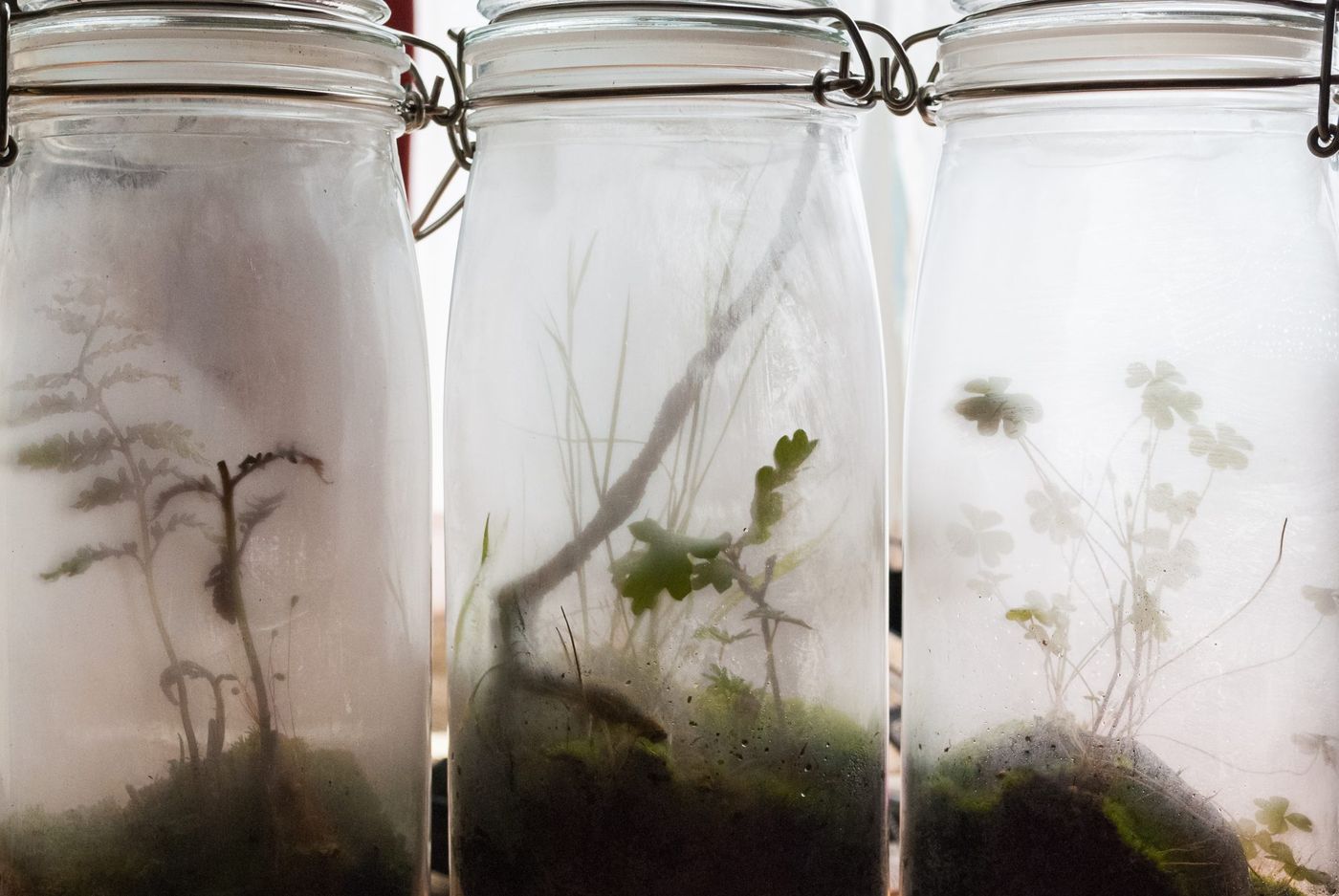
The glass is your dashboard. A light fog that clears through the day means the water balance is right. Heavy fog you can't see through, or water running down the inside, means it's too wet — take the lid off for a few hours to let some moisture escape. Persistent bone-dry glass with no fog at all means it's too dry, so add a light mist. You're aiming for that gentle come-and-go haze, not a dripping window.
Mold: why it appears and how to stop it
A little white fuzz early on is normal as a new terrarium settles — it usually passes. Mold takes hold when there's too much moisture, poor airflow, and decaying material to feed on. Fix it by removing any dead leaves or rotting bits, wiping off visible mold, venting the lid to dry things slightly, and adding a layer of horticultural charcoal if you skipped it. A clean-up crew of springtails is the long-term answer — they graze on mold and keep it from ever taking over, which is why our planted terrarium guide leans on them.
See horticultural charcoal on Amazon →Trimming and light upkeep
Moss terrariums are low-effort, not no-effort. Every few weeks, snip back any plants outgrowing the space, pull out yellowed or dead growth before it can rot, and gently press lifting moss back onto the substrate. A pair of long tweezers and small scissors makes this easy without dismantling the layout — the same tools you used to plant it. Wipe the outside glass so you can actually see in.
See terrarium tool kits on Amazon →A simple care routine
Put it somewhere bright but out of direct sun. Glance at the glass every few days: light fog means leave it, heavy fog means vent the lid, no fog and dry substrate means a quick mist. Every few weeks, remove any dead matter and trim as needed. That's genuinely most of it — the drainage layer and charcoal you built in (see our drainage layer guide) do the quiet work of keeping roots out of standing water.
Different mosses and plants have slightly different tolerances for light and moisture — if one species struggles while the rest thrive, it may simply be the wrong plant for a sealed, high-humidity jar rather than a care mistake.