
Chameleon Care for Beginners: What to Know Before You Buy
Why chameleons are usually recommended as a second reptile, not a first.
Published July 8, 2026
Some links below are affiliate links. We may earn a commission from qualifying purchases at no extra cost to you. Read our disclosure.
Chameleons are often bought on looks — the color shifts and slow, deliberate movements are genuinely striking. But their care requirements are narrower and less forgiving than most starter reptiles, which is why most care sheets list them as an intermediate or advanced pet rather than a good first animal.
Airflow matters as much as humidity
Chameleons need high humidity but stagnant, damp air causes respiratory infections quickly. That's why they're kept in tall, mesh-sided enclosures rather than sealed glass tanks — the mesh lets humidity from misting or fogging escape and refresh, instead of sitting stale. A solid-walled tank built for a snake or gecko is usually the wrong enclosure for a chameleon.
Vertical space over floor space
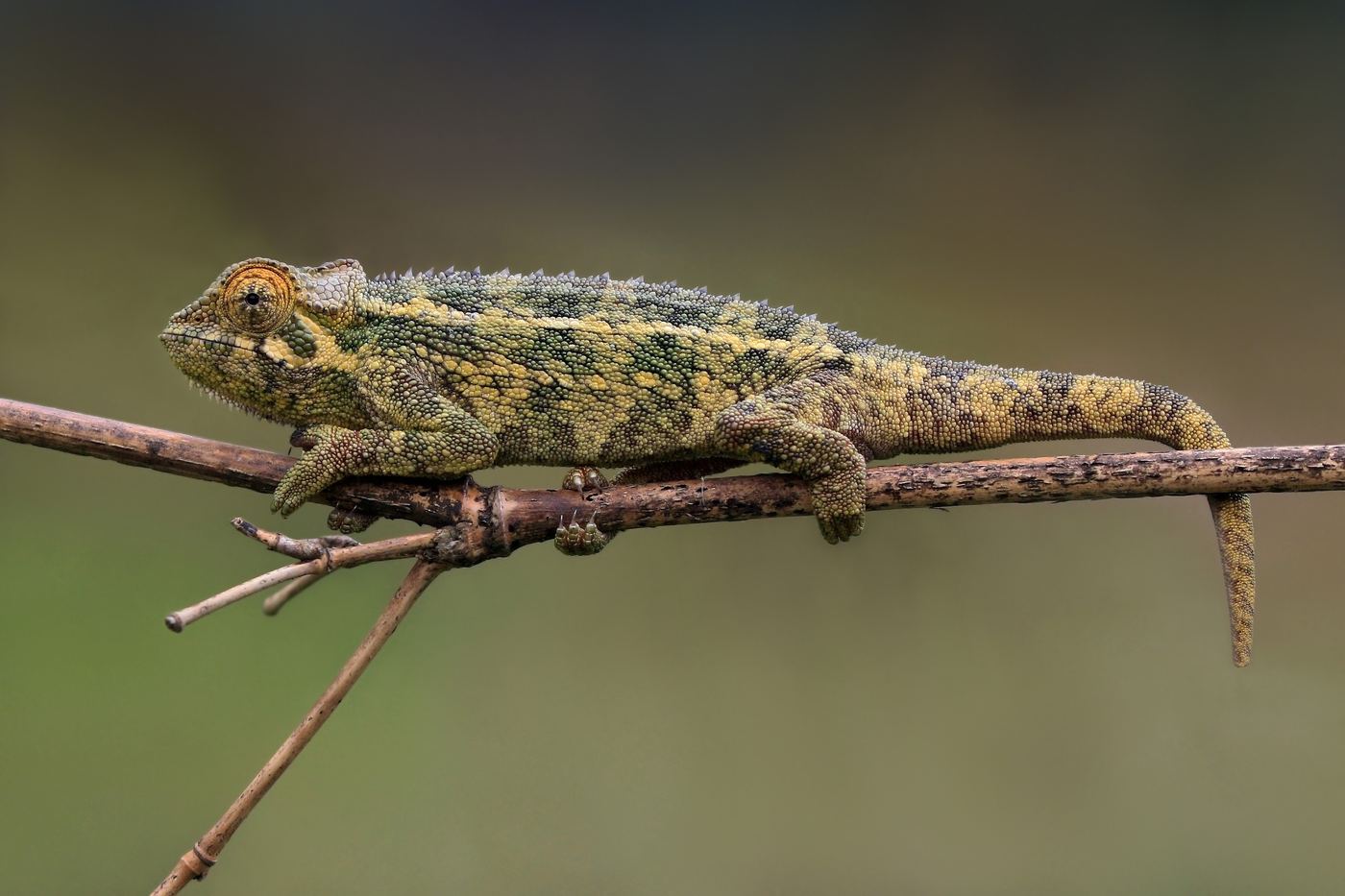
Chameleons are arboreal and spend almost all their time climbing, not walking on the ground. Enclosure height matters more than floor area — a tall, narrow mesh cage with varied branch diameters and dense cover gives them more usable space than a wide, short tank of the same volume.
Daily misting or a drip/fogging routine
Most chameleon species only recognize moving water as drinking water — they generally won't drink from a still bowl. A misting system or dripper run daily is the usual solution. Compare the two approaches in our misting vs. fogging guide.
See misting systems on Amazon →UVB is not optional
Chameleons need UVB lighting to metabolize calcium properly; without it, they're at risk of metabolic bone disease. See our lighting guide for what strength and distance to use, and plan to replace UVB bulbs on the schedule the manufacturer recommends — output drops well before the bulb visibly stops working.
They generally don't want to be handled
Unlike bearded dragons or leopard geckos, most chameleons tolerate handling rather than enjoy it, and frequent handling is a common source of stress. If you want a reptile you can interact with hands-on daily, a chameleon is usually not the best match.
This is a general overview, not species-specific care. Requirements vary meaningfully between veiled, panther, Jackson's and other chameleon species — cross-check with a species-specific care sheet or reptile vet before buying.