
Best Containers for a Moss Terrarium
Before the moss, before the soil, comes the glass. The container you choose quietly decides how humid, how bright and how easy to care for your whole terrarium will be.
Some links below are affiliate links. We may earn a commission from qualifying purchases at no extra cost to you. Read our disclosure.
A moss terrarium is really just a moss and a microclimate, and the container is what holds that microclimate together. Get the vessel right and the moss almost cares for itself; get it wrong — too open, too dark, too fiddly to plant — and you'll fight it forever. Here's how to pick the glass before you start filling it.
Closed jars: the moss default
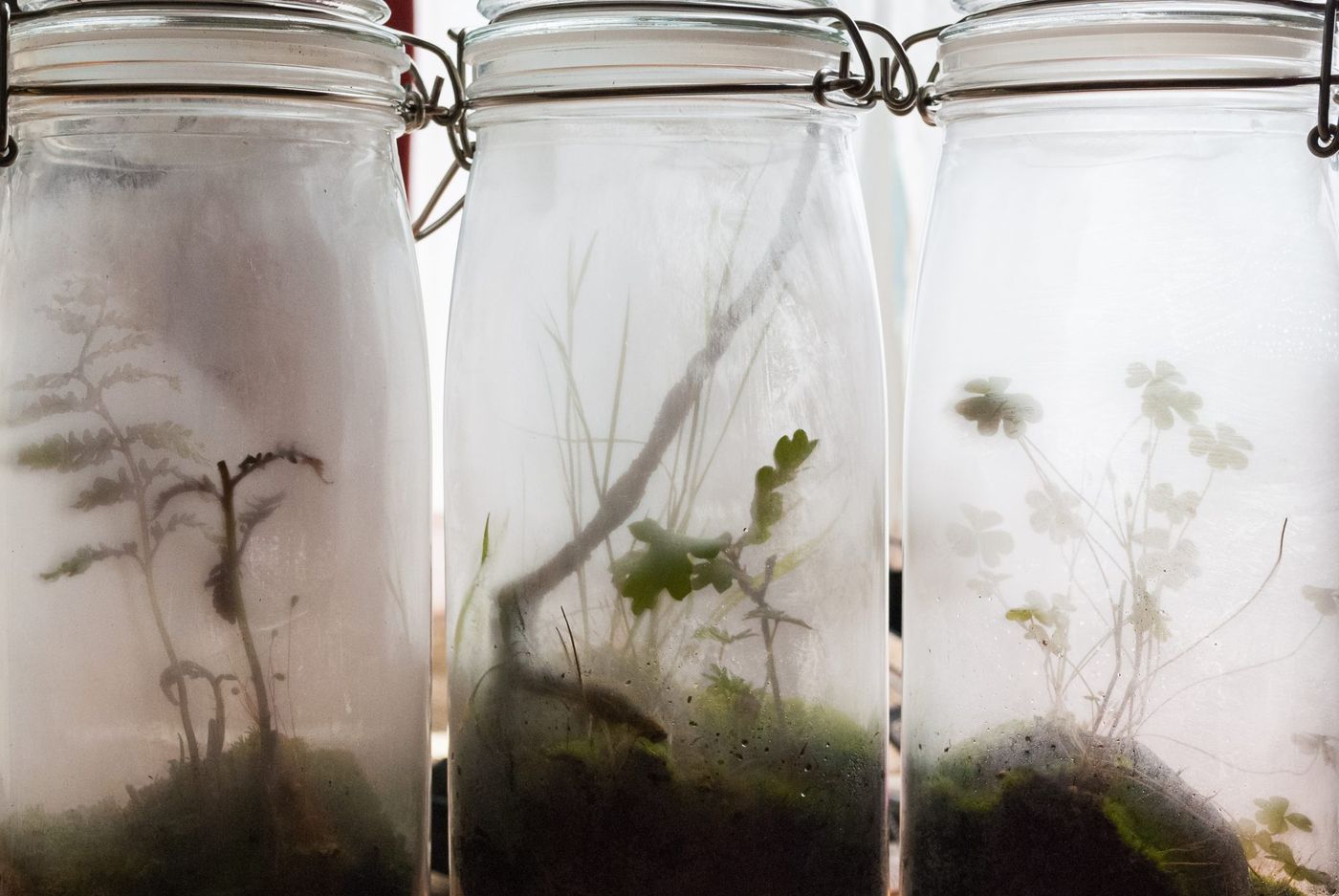
A sealed jar is the natural home for moss. The lid traps the humidity moss thrives on and lets the terrarium recycle its own water, so it can go weeks or months untouched — the whole reason moss terrariums are so low-maintenance, as our moss terrarium care guide explains. Apothecary jars, clip-top jars and big mason jars all work. Look for clear glass and a lid that actually closes; a wide mouth makes planting far easier.
See closed terrarium jars on Amazon →Geometric & decorative glass
The faceted geometric terrariums all over Pinterest look stunning, but read the fine print for moss: many have open panels or loose-fitting doors that let humidity escape. They can absolutely hold moss if the openings are small and mostly closed, or if you're happy to mist regularly. Buy them for the look, but check how well they actually seal before committing your moss to one.
See geometric terrariums on Amazon →Open bowls & cloches
Open bowls, glass globes and cloches suit low-humidity plants like succulents and air plants better than moss — an open top lets moisture evaporate fast, so moss in one needs frequent misting to stay lush. A glass cloche (a dome over a dish) is a nice middle ground: mostly enclosed for humidity, but liftable for easy access. If you love the open look, pair it with a misting routine and be realistic about the upkeep.
See cloches & open bowls on Amazon →Shape, opening and size
Three practical details decide how pleasant the build is. Opening: a wide mouth you can fit a hand into beats an elegant narrow neck you'll curse while planting. Size: bigger volumes buffer humidity and temperature swings, so they're more forgiving than a tiny jar that dries and overheats quickly. Depth: leave room for a drainage layer and substrate — see our substrate guide — plus headroom for the moss to sit below the rim, not squashed against the lid.
See wide-mouth terrarium jars on Amazon →What to avoid
Skip coloured or frosted glass — it starves moss of light. Avoid containers that once held oils or cleaning chemicals, since residues can linger. Steer clear of very tall, very narrow vases where you can't reach the bottom to plant or fix problems. And don't put any sealed terrarium in direct sun: clear glass plus a lid becomes an oven fast, whatever the container.
A good first container
For a first moss terrarium: a clear, closed jar with a wide mouth and a lid that seals — a medium apothecary or clip-top jar is ideal. It holds humidity, gives moss the light it needs, and is forgiving enough to learn on. Once you've got the container, our closed terrarium build guide and best moss guide take you from empty glass to a living one.
Any clear, sealable glass vessel can become a moss terrarium — the "best" container is really the one that holds humidity, lets light in, and is easy for you to plant and reach into.